
BMF: Big Meech Seeks A Presidential Pass From Obama

BlackMafiaFamilyBook
“The Rise and Fall of Big Meech and the Black Mafia Family” on Amazon. Written by Mara Shalhoup

Demetrius Flenory aka “Big Meech,” the head of the mulit-million dollar drug carte, Black Mafia Family penned a jailhouse letter to Russell Simmons, in which he pleads with the music mogul to ask President Obama to issue a pardon.

  • 2008 Fugees artist John Forte,with the help of Carly Simon, granted a pardon despite being in prison for a drug conviction.

Meech writes:

“Most murderers, rapists, and child molesters get much less time than non-violent drug offenders. The punishments don’t fit the crimes when it comes to these drug laws and sentences”

In wake of the 2009 New York State drug law revision enabled more than 1,000 inmates the opportunity to apply for court  resentencings and possible releases.

[SEE ALSO] Rapper Drake Earns His Hood Pass From BMF Boss Big Meech?

Meech contacted Russell Simmons in the hope that he would help him find a break.

“Entertainers have used certain drug dealers or street people for street credibility.”

He also uses Rapper T.I. as an example of what he could accomplish –for the good as a free man:

[T.I.] made the government ($9-10 million) before he did his first year in prison with his ‘Countdown to Lockdown’ television show,” f I was home to take care of all of the legitimate opportunities that my fiance and I have, I could do just as much, if not more.”

No word if President Obama has taken the Black Mafia Family Don into consideration.

[WATCH] this spoof of President Obama speaking on Big Meech & the Black Mafia Family.

Other Stories

  1. Big Meech Writes Letter Supporting BMF Wives Reality TV show
  2. 21 Questions with Big Meech: AllHipHop.com
  3. “Big Meech” Flenory – Change.org Petition
Tivoli Enquiry Begins; Examines Police Incursion Into The West Kingston Community Of Tivoli Gardens

A Commission of Enquiry has begun to look into the circumstances that led to the deaths of 70 people during a joint police-military operation in Kingston, Jamaica in May 2010.

The enquiry, which began on December 1, will hear from over 500 witnesses over a three-month period. The commission chairman and former Barbados Attorney-General, Sir David Simmons, and two other justices will determine, among other things, whether security forces used excessive measures during an incursion into the West Kingston community of Tivoli Gardens – a depressed inner-city slum which was the stronghold of convicted gangster Christopher ‘Dudus’ Coke.

The killings occurred over a four-day period in May 2010 after the government led by former Prime Minister Bruce Golding declared a State of Emergency to allow the police and the military to execute a warrant for Coke’s arrest. Coke was subsequently extradited to the United States, where he is currently serving a 23-year sentence.

During the first week of testimony at the enquiry, eight residents of West Kingston gave various accounts of being beaten and shot at by soldiers or police officers. Several witnesses described being denied the opportunity to seek medical care for their injuries and alleged that the security forces damaged valuable property as they sought to learn Coke’s whereabouts.

The commission has already seen fiery exchanges, most notably between Convenor of the Tivoli Committee, Lloyd D’Aguilar, and Sir David. Mr. D’Aguilar was evicted from the Jamaica Conference Centre on the second day of the enquiry and barred for the duration of the proceedings after he engaged in a verbal tirade with the commission chairman, calling him a ‘political hack’ and ‘an enemy of the people of Tivoli Gardens”.

In the meantime, after several testy interactions between witnesses and lawyers representing the police and the military, the Office of the Public Defender, which represents most of the civilian witnesses, says it will consider debriefing the witnesses after giving testimony.

Included in the Terms of Reference for the commissioners is to examine the conduct of operations by the security forces in Tivoli Gardens and look into allegations that persons were especially armed to repel any law enforcement effort to capture the fugitive Christopher “Dudus” Coke.

The enquiry is also seeking to determine what arrangements were made, and what precautions were taken, to protect citizens in Tivoli Gardens and other affected areas from unnecessary injury or property damage during the State of Emergency.

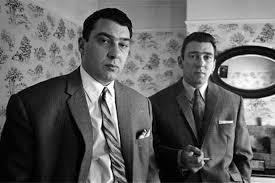
Reggie Kray 1/2 Of London’s ‘Kray Twins’ Claims His Brother Ronnie Died With No Regret For Killings

KrayTwins

Ex-gangland leader talks about the twins’ violent past.


Via The Independent:

Kray, 61, also disclosed that he and his brother, Ronnie, who died of a heart attack 11 days ago, had a “premonition” that something bad was going to happen.

The gangland leaders were given life sentences in 1969 for killing Jack “the Hat” McVitie who was knifed to death. Ronnie was also convicted of the murder of George Cornell, whom he shot between the eyes in the Blind Beggar pub in the East End of London after being called a “fat poof”.

Reggie Kray, the man whose words and deeds once terrorised the London underworld, said yesterday: “I have got no regrets, my brother didn’t have any either. I have learnt over the years, as did Ron, that there are many people worse off than us. A lot of people have no choice but we did.”

Speaking at Maidstone prison in Kent, in the first full interview since his brother’s death, he added: “I would not change anything. You can’t just select parts of your life and alter them. I know Ronnie would not have wanted to change anything as well.

“It does not mean to say that I enjoy the fact that I committed a murder but you can’t select the parts of life that you do and don’t want.”

For much of the Sixties the Krays ruled large parts of the capital through extreme violence and fear.

Kray, whose body still looks tough and hard from his daily regime of cold showers and working out in the gym, still believes – despite 27 years in jail – that the twins were not evil.

“Ron and myself wrought some violence on different people, but we lived in a violent world and violence has been perpetrated on us as well. That was the way of life in the East End of London then.

“I’ve met people inside who have become part of my family – if I hadn’t done what I did I would never have meet them. I feel I have been blessed.”

Dressed in shorts, Reebok training shoes, a blue shirt, leather waistcoat and gold jewelry, he said he had been in almost daily contact with his twin brother, who was diagnosed a schizophrenic, until the day he died. They were allowed to speak on the telephone every Thursday and wrote almost every day. “He was okay when I spoke to him last, although we had a premonition that something was going to happen,” he said.

But after being allowed out to see his brother’s body last Thursday Kray said he knew he was at peace. “Being twins there’s a certain amount of telepathy. I know he is at ease.”

He said his concerns about the possibility of foul play in his brother’s death had been resolved after he was sent the doctor’s report that showed Ronnie died of a heart attack.

He has instructed his solicitor to investigate his brother’s inquest, in which a coroner took three minutes to return a verdict of death by natural causes. Kray added: “If I’m not satisfied I will take action.”

Staff at Maidstone jail said yesterday that Kray was now a model inmate. One officer said: “He’s an elderly gentleman now. He’s as good as gold – if every prisoner was like him there would be no problems here at all.”