
Tag: Behind Bars
FBI Admits Flawed Forensic Test Results May Have Led To Hundreds Of Wrongful Criminal Convictions

The Federal Bureau of Investigation (FBI) admits that hundreds of flawed or “inaccurate” forensic testing results were submitted as evidence in hundreds of criminal trials over the last 30 years.
This means that there could be as many as hundreds of innocent convicted people in prison for crimes that they did not commit, dating as far back as the 1980s.
Unfortunately, among the possible wrongfully convicted were 32 people who received the death penalty; of which 14 of those people have been executed, based on forensic testing results submitted during trial.
The US Justice Department does acknowledge fault and said (via statement) that they and the FBI are “committed to ensuring that affected defendants are notified of past errors and that justice is done in every instance.”
What does this mean for the hundreds of people who may have been wrongfully convicted?
Wrongful incarceration is not only an injustice to the innocent, but also to the victim(s) as well as the community collectively. Incarcerating the wrong person for a crime certainly doesn’t make the neighborhood any safer and the taxpayers foot the bill.
R&B singer and philanthropist John Legend recently launched “FREE AMERICA”, a nationwide campaign established in efforts to raise awareness about America’s incarceration problem and help find solutions to end mass incarceration throughout the U.S.
Follow Let’s Free America for more information.

The FBI has admitted large scale failings in the evidence some of its forensic experts gave in hundreds of criminal trials in the 1980s and 1990s.
Flawed evidence was given by 26 forensic examiners in the agency’s microscopic hair comparison unit which affected 268 trials, the Washington Post reported.
In more than 95 per cent of the cases forensic matches were overstated in favour of prosecution arguments, the newspaper said.
The cases included 32 in which defendants received the death penalty, and 14 of those have since been executed or died in prison.
The Washington Post said the figures had been established by the National Association of Criminal Defence Lawyers and the Innocence Project.
Defendants involved in the cases are in 46 states and are being notified to consider if there are grounds for appeal.
An investigation began in 2012 after the Washington Post reported that flawed forensic matches of hair may have led to wrongful convictions.
In a statement the FBI and US Justice Department said they were “committed to ensuring that affected defendants are notified of past errors and that justice is done in every instance.
“The department and the FBI are also committed to ensuring the accuracy of future hair analysis, as well as the application of all disciplines of forensic science.”
‘The Legend of Shorty’ Film to Document the Life of Mexican Drug Lord El Chapo Guzman
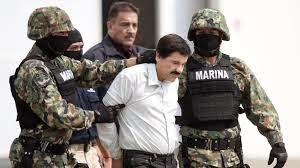 Will Mexican drug lord Joaquín El Chapo Guzmán become more famous now that he is behind bars than when he was hiding in secret tunnels and sewers? It’s hard to tell, but two weeks after his headline-grabbing arrest in Mexico, a new documentary about the life of this nearly mythical figure made its world premiere at the South by Southwest (SXSW) festival in Austin, Texas.
According to those who have watched The Legend Of Shorty, a 90 minute British documentary co-directed by British filmmaker Angus MacQueen and Peruvian journalist Guillermo Galdós, the film is a blend of mythology and hard facts. The Guardian’s film critic Henry Barnes wrote that The Legend of Shorty follows MacQueen and Galdós as they head out on their own investigation into the whereabouts of the world’s biggest drug dealer. “With extraordinary access to the cartel the pair travel to Mexico’s Golden Triangle, bear witness to the batch-loads of cocaine, meth and marijuana being prepared for transport and take part in long, often surreal meetings with Chapo’s inner circle, including a lunch date with his mum,” Barnes wrote.
McQueen told Spain’s Efe wire service that they didn’t think their lives were in danger when they were filming, because they are foreigners. There is a general belief that foreign nationals, whether tourists or otherwise, tend to be less physically vulnerable than Mexican nationals.
It is not clear if MacQueen and Galdós tried and failed to interview El Chapo before he was caught. In any event, the Mexican Navy and the DEA beat them to it when they found the drug lord still in bed at an oceanfront condominium in Mazatlán, Sinaloa, his home state, in the early hours of February 22. The arrest put an end to an international manhunt that has made a mockery of U.S. and Mexican law-enforcement over the past 13 years.
Barnes writes that the film’s directors recruited songwriter Jackson Scott to compose folk songs in English and Spanish telling tales about the past of one the world’s richest outlaws: “We hear how Chapo escaped from a maximum security prison by hiding in a laundry cart, we watch the film-makers compare the kingpin to Zorro, racing through the countryside, answering the call of the common man.”
In an effort to balance what appears to be a friendly portrait of the man responsible for introducing 25% of the illegal drugs into the U.S. market –including 50% of the heroine– the film discusses the bloody war on drugs and the 80,000 deaths that have resulted from it. Mexican journalist Anabel Hernández, author of Narcoland: The Mexican Drug Lords and Their Godfathers, offers “a vital counter-point to the intoxicating legend”, as Barnes puts it, by accusing the Mexican government of protecting El Chapo while he turned his business into a word-wide criminal empire that has no precedent in history.
Barnes calls The Legend of Shorty “an impressive film” and says that El Chapo’s unexpected arrest does not annul its purpose: “To suggest so is to assume that El Chapo’s empire is locked up with the man. That a corporation shuts down because the CEO is absent.”
On that, Barnes has a point. There seems to be a wide consensus, both inside and outside Mexico, that El Chapo’s arrest will change little. “He will have a laptop, [his prison] will turn into a hotel, and he will return to running the cartel from there,” a senior DEA official told The Guardian last month. “That is not something he has to build – it is something he already has.”
Since 2009, El Chapo has been included in Forbes’ World’s Most Powerful People list.
Originally posted on Forbes.com
 The Pen Hustle With Brandy Cavalli
You must be logged in to post a comment.