Boston Bomber Sentenced To Death By Lethal Injection For The Boston Marathon Attacks

securitycam
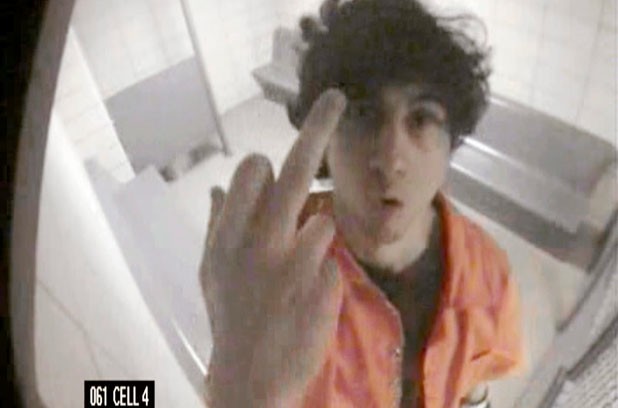
21 year old Dzhokhar Tsarnaev shows no remorse and flips a security camera the middle finger. Jurors were showed this photo prior to him being sentenced to death on May 15, 2015.

At this point the 21 year old Russian punk  “Boston Bomber” may be one of the (if not THE) most hated men in the United States.

A jury sentenced Dzhokhar Tsarnaev to die by way of lethal injection for his role in the 2013 gruesome terrorist bombing that rocked Boston, leaving hundreds wounded, and horrifying the rest of the world.

I personally have never had a strong opinion about the death penalty, but in this case I believe that the jury did the right thing. I don’t think that a person who intentionally set out to kill hundreds of innocent people deserves to breathe any more air, especially when he shows the world how he really feels by flipping the bird to a security camera and according to reports, seemingly “bored” throughout his death penalty trial.

Tsarnaev’s attorneys are more than likely already filling out the appeals paperwork, which (unfortunately) means that taxpayers will have to continue to house and feed this menace until the appeals process is exhausted.

Do you think the jury made the right decision to sentence him to death?

Peep the article.

Join the discussion.


Boston Marathon Terriost Attacks 2013
A bomb set by the Tsarnaev brothers can be seen going off as Boston Marathon runners enter the finish line.

Via Time:

A jury sentenced Dzhokhar Tsarnaev to death Friday for the Boston Marathon bombing, sweeping aside pleas that he was just a “kid” who fell under the influence of his fanatical older brother.

Tsarnaev, 21, stood with his hands folded, his head slightly bowed, upon learning his fate, decided after 14 hours of deliberations over three days. It was the most closely watched terrorism trial in the U.S. since the Oklahoma City bombing case two decades ago.

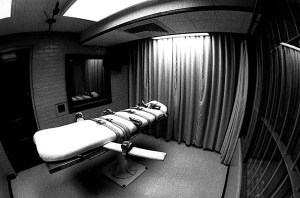
The decision sets the stage for what could be the nation’s first execution of a terrorist in the post-9/11 era, though the case is likely to go through years of appeals. The execution would be carried out by lethal injection.

The 12-member federal jury had to be unanimous for Tsarnaev to get the death penalty. Otherwise, he would have automatically received a sentence of life in prison without parole.

Bombing victim Sydney Corcoran, who nearly bled to death and whose mother lost both legs, said: “My mother and I think that NOW he will go away and we will be able to move on. Justice. In his own words, ‘an eye for an eye.’”

Tsarnaev’s father, Anzor Tsarnaev, reached by phone by the Associated Press in the Russian region of Dagestan, let out a deep moan upon hearing the news and hung up.

In a statement, Attorney General Loretta Lynch called the bombing a “cowardly attack” and added: “The ultimate penalty is a fitting punishment for this horrific crime, and we hope that the completion of this prosecution will bring some measure of closure to the victims and their families.”

Three people were killed and more than 260 wounded when two pressure-cooker bombs packed with shrapnel exploded near the finish line on April 15, 2013.

The former college student was convicted last month of all 30 federal charges against him, including use of a weapon of mass destruction and the killing of an MIT police officer during the Tsarnaev brothers’ getaway attempt. Seventeen of those charges carried the possibility of the death penalty.

Tsarnaev’s chief lawyer, death penalty specialist Judy Clarke, admitted at the very start of the trial that he participated in the bombings, bluntly telling the jury: “It was him.”

But the defense argued that Dzhokhar was an impressionable 19-year-old who was led astray by his volatile and domineering 26-year-old brother, Tamerlan, who was portrayed as the mastermind of the plot to punish the U.S. for its wars in Muslim countries.

 Prosecutors depicted Dzhokhar Tsarnaev as an equal partner in the attack, saying he was so coldhearted he planted a bomb on the pavement behind a group of children, killing an 8-year-old boy. To drive home their point, prosecutors cited the message he scrawled in the dry-docked boat where he was captured: “Stop killing our innocent people and we will stop.” And they opened their case in the penalty phase with a startling photo of him giving the finger to a security camera in his jail cell months after his arrest.
“This is Dzhokhar Tsarnaev —unconcerned, unrepentant and unchanged,” prosecutor Nadine Pellegrin said.

The jurors also heard grisly and heartbreaking testimony from numerous bombing survivors who described seeing their legs blown off or watching someone next to them die.

Killed in the bombing were Lingzi Lu, a 23-year-old Boston University graduate student from China; Krystle Campbell, a 29-year-old restaurant manager from Medford; and 8-year-old Martin Richard, who had gone to watch the marathon with his family. Massachusetts Institute of Technology police Officer Sean Collier was shot to death in his cruiser days later. Seventeen people lost legs in the bombings.

Tamerlan Tsarnaev died days after the bombing when he was shot by police and run over by Dzhokhar during a chaotic getaway attempt.

The speed with which the jury reached a decision surprised some, given that the panel had to fill out a detailed, 24-page worksheet in which the jurors tallied up the factors for and against the death penalty.

The possible aggravating factors cited by the prosecution included the cruelty of the crime, the killing of a child, the amount of carnage inflicted, and lack of remorse. The possible mitigating factors included Tsarnaev’s age, the possible influence of his brother and his turbulent, dysfunctional family.

The jury agreed with the prosecution on 11 of the 12 aggravating factors cited, including lack of remorse. In weighing possible mitigating factors, only three of the 12 jurors found he acted under the influence of his brother.

Tsarnaev did not take the stand at his trial, and he slouched in his seat through most of the case, a seemingly bored look on his face. In his only flash of emotion during the months-long case, he cried when his Russian aunt took the stand.

The only evidence of any remorse on his part in the two years since the attack came from the defense’s final witness, Sister Helen Prejean, a Roman Catholic nun and staunch death penalty opponent made famous by the movie “Dead Man Walking.”

She quoted Tsarnaev as saying of the bombing victims: “No one deserves to suffer like they did.”

Tsarnaev’s lawyers also called teachers, friends and Russian relatives who described him as a sweet and kind boy who cried during “The Lion King.” The defense called him a “good kid.”

The defense argued that sparing his life and instead sending him to the federal Supermax prison in Florence, Colorado, would be a harsh punishment and would best allow the bombing victims to move on with their lives without having to read about years of death penalty appeals.

U.S. District Judge George O’Toole Jr. will formally impose the sentence at a later date during a hearing in which bombing victims will be allowed to speak. Tsarnaev will also be given the opportunity to address the court.

The Tsarnaevs —ethnic Chechens — lived in the former Soviet republic of Kyrgyzstan and the volatile Dagestan region, near Chechnya, before moving to the U.S. about a decade before the bombings. They settled in Cambridge, just outside Boston.

Most Americans Support The Death Penalty

Death PenaltyA majority of Americans support the death penalty, even though that level of support has been dropping fairly consistently for about two decades.

However, while there are sizable differences in how various groups view capital punishment — with big gaps divided by gender, race and political views — Americans seem to agree on one thing: There is still some risk that an innocent person will be put to death.

A new Pew Research Center poll found that seven in 10 Americans feel this way, with just a quarter of people saying there are enough safeguards in the system to prevent the execution of an innocent person.

This feeling is remarkably consistent among every group of people, even as there are solid divides found in the way people of different races and with different political beliefs view the system.

Yet regardless of other disputes over the death penalty, everyone seems to agree that the country’s capital punishment system carries with it an inherent risk of executing the innocent. Majorities of every group polled by Pew agreed that there is a danger that this will happen.

Death penalty opponents point to this danger as one of the main reasons they object to the practice. Attorney General Eric H. Holder Jr. said earlier this year he opposes the death penalty because “the ultimate nightmare” is that someone will be executed in error. And because death sentences are handed out as part of a system that ultimately relies on the judgments of human beings — people can, and do, make mistakes — such a failure is “inevitable,” he said.

“There’s always the possibility that mistakes will be made,” Holder said. “Mistakes and determinations made by juries, mistakes in terms of the kind of representation somebody facing a capital offense receives….There is no ability to correct a mistake where somebody has, in fact, been executed.”

This concept — an innocent person who is still found guilty and given the most severe sentence possible — is obviously not theoretical. Since the early 1970s, more than 150 people sentenced to death have been exonerated, according to the Death Penalty Information Center. Meanwhile, a record 125 people were exonerated in the United States last year, and six of those people had been sentenced to death, the National Registry of Exonerations said in its report.

In Louisiana last month, a former prosecutor publicly apologized for helping put a man who turned out to be innocent on death row. The prosecutor argued that the situation with Glenn Ford, the exonerated man who was eventually released, showed how easily the system could be manipulated by an eager prosecutor and questionable evidence.

“This case shows why the death penalty is just an abomination,” Marty Stroud, the former prosecutor, told The Post last month. “The system failed Mr. Ford, and I was part of the system.” He added: “All it is is state-assisted revenge. We can’t do it. It’s arbitrary, it’s capricious. And I believe that it’s barbaric.”

[See Also] How the death penalty continued its slow, steady decline last year

The case of Cameron Todd Willingham, who was executed by Texas in 2004, remains both in the news and in the court system. Willingham was put to death for setting a fire that killed his three daughters. Yet fresh doubts linger in this particular case more than a decade later, as the jailhouse informant who testified against Willingham later said he lied on the witness stand to reduce his own prison sentence. The prosecutor in the case was formally accused of misconduct in court last month.

It may seem odd that so many people would support the death penalty while also acknowledging that innocent people could very well be put to death. Part of that may be accepting the inherent risk that accompanies something as irreversible as death, but a part of it may also simply be that people are not paying that much attention to capital punishment. Executions in this country are generally carried out at night inside heavily guarded prisons with just a small handful of witnesses, so the public rarely takes note of them.

Nearly half of Americans told Pew they think the number of people put to death has remained steady or increased over the last decade. In reality, the number of executions has fallen in recent years, dipping last year to the lowest number in two decades. As we noted last year, support for the death penalty did not really budge after high-profile botched executions, and it was unclear how many people paid much attention to these incidents or the people who were exonerated.

So why do people still support it? Well, most people — a little more than six in 10 — say that the death penalty is morally justified when someone commits a crime like murder. About half as many people say it is morally wrong. The same number of people who think it is morally justified also do not believe that the death penalty can deter serious crimes.

Among people who do support the death penalty, nine out of 10 of them say it is morally justified in cases like murder. That is far and away the largest gap among the four categories viewed in the graphic above, highlighting what would appear to be the biggest gulf between supporters and opponents.

As for who actually supports the death penalty and who is opposed to it: More men support it than women (64 percent to 49 percent), a gap that has grown significantly over just the last four years, as more women have turned against it.

There is also a considerable divide among people over whether or not the death penalty is racially imbalanced.

A majority of white people support the death penalty (63 percent support, 33 percent opposition), basically a flipped image of the way black people feel about the issue (34 percent support, 57 percent opposition). Hispanic people are more evenly split, but opposition (47 percent) narrowly edges out support (45 percent) among them; they aren’t as opposed to it as black people, but they are not nearly as supportive as white people.

Still, about half of people overall think minorities are more likely to get a death sentence than a white person who committed a similar crime. Death-penalty opponents are very likely to view the system as being racially unfair: Seven in 10 opponents say the sentencing is racially unfair, while about four in 10 supporters say the same thing.

Among black people, these opinions are even more pronounced, as more than three-quarters of black respondents told Pew white people are less likely to receive the death penalty. Meanwhile, white people are split between that opinion and seeing no racial disparity.

This is also the area where the biggest split can be seen based on a person’s level of formal education. While support for or opposition to the death penalty is not that dramatically different for people who have graduated from college versus those did not, college graduates are much more likely to think the death penalty is racially imbalanced (60 percent) than people who did not attend college (44 percent).

Democrats are more than twice as likely as Republicans to think that white people are less likely to get a death sentence. This has accompanied a big overall shift in the way Democrats view the issue. In 2011, more Democrats said they supported the death penalty (49 percent) than opposed it (43 percent). Now, after a big swing in opinion, a majority of them oppose the death penalty (56 percent), while a smaller number support it (40 percent).

Opinions among Republicans are basically the same over the same period (a little more than three-quarters of them support it), while most independents still support it (a number that dipped to 57 percent now from 64 percent then).

Washington Post

Man Ran Over By Suge Knight Says He’s Not Snitching

SugeKnightcourt5

 As the Suge Knight Saga continues, one of the men that that was run over by Knight at a Compton burger joint says that he’s not going to “snitch” on the former Death Row label owner. 

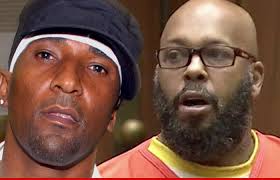
Even though there is surveillance video of Suge Knight running over two men in his red pickup truck, “Bone” says he’s not talking.

Being as though there is pretty concrete evidence of the hit and run which left one man dead, I wonder how this case will play out.

By personal experience I know that once the State or Federal prosecutors pick up a case, they are pretty much going after you whether the victim approves or not. Jesus Christ (himself) would have to come down off the cross to save you once they have video evidence of a crime being committed.

This is definitely still a big positive for Suge’s defense but we will see how the court responds… 

Stay tuned to The Pen Hustler…


clesloan

Via TMZ:

The man who got run over by Suge Knight, and survived, tearfully testified in court that he would not “snitch” and help prosecutors put Suge in prison.

Cle “Bone” Sloan was called to the stand during Suge’s preliminary hearing Monday AM, and the prosecutor raised the topic of snitching.

Sloan got emotional and declared he “doesn’t want to be used to send this man to prison.” He added, “I screwed up and Terry’s dead.”

It’s amazing … the guy who was laid up for weeks with broken bones from Suge plowing over him — took the stand and tried to take the blame for Terry Carter’s death … seemingly taking some heat off Suge.

But what Bone giveth he taketh away, because by saying he wouldn’t snitch and help put Suge in prison, by definition he’s saying Suge did bad things that should land him in the big house.