
Larry Hoover Jr Wants Rapper Rick Ross To Never Use The Hoover Name Again

rickross


Rappers spit a lot of falsehoods in their rhymes for entertainment that cause controversy. Such was the case when Miami rapper Rick Ross likened himself to Big Meech and Larry Hoover on his Blowing Money Fast music single. While the culture regarded the reference as legendary, members of the Hoover family regarded it as completely disrespectful.

American crime figures such as Big Meech and Larry Hoover are often times glamorized by the Hip Hop community for their drug dealing histories but to the family of Larry Hoover the reference negatively impacted their mission to overcome the stigma attached to their name.

SEE THE VIDEO

The Hoover camp caught up with the self proclaimed Teflon Don during a trip to Chicago and explained why the name drop was an unwanted one.

Ross maintained that his mention of Hoover was homage to Hoover whom he viewed a political prisoner. Hoover’s camp believe the name referenced alongside drugs and violence and continued to glorify the lifestyle that the former gang leader now denounces.

According to RubyHornet, Jim Allen states:

Hoover is very remorseful for the things that he’s done as well things done through the street organization.  A lot of that goes back to him and we’re trying to change that around and push peace instead of negativity. Larry Hoover Jr. and Jim Allen are pushing peace.  That’s the message Larry Hoover is pushing.  When his name is mentioned in songs connected to crime, it tarnishes what we’re doing out in the street.  There are people all over the country that hear Rick Ross’ music and when he mentions Hoover’s name he makes it seem that this is the life they’re living in the present, which they’re not.”

Allen, just like Larry Hoover Jr. as well as Gator Bradley, were all taken aback by Ross’ reference.  Most importantly, they felt that Ross brought up Hoover’s name out of context, linking with a lifestyle he no longer lives nor supports.

Larry Hoover Jr. shared Allen’s sentiments:

“[the reference] is a big deal because he didn’t contact anybody before he did it.  It was the fact that he was associating his name in a bad light.  He came to town and we reached out to him to right the situation… As long as everyone is a man of their word, everything is fine.  He got the understanding that it’s not good to use [Hoover’s] name in the context that he used it.  That’s as far away from where we are as ever.”

Hoover has been incarcerated since 1973. He is currently held in Florence, Co under maximum security.

Related Stories

  1. Leader of Gangster Disciples Larry Hoover Denounces Former Gangster Lifestyle, Encourages “Growth & Development”
  2. Rick Ross Threatened: Rapper Says Gangster Disciple
  3. Nation of Islam Minister Louis Farrakhan Calls Gangster

Public Defender For The Residents Of Tivoli Gardens Community Blames The Jamaican Government For Bloody Massacre

tivolimassacre2Queen’s Counsel Lord Anthony Gifford yesterday charged that the “tragedy of Tivoli” was caused by the “unnecessary delay” of the Bruce Golding Administration in giving the authority to commence extradition proceedings against Jamaica Labour Party supporter and former West Kingston don Christopher ‘Dudus’ Coke.

Gifford, who is representing the Office of the Public Defender at the Tivoli Enquiry, made the statement while questioning former Justice Minister and Attorney General Dorothy Lightbourne on the matter of the delay in her signing the authority to proceed with extradition proceedings against Coke.

“And therefore,” Gifford said, “the tragedy of Tivoli was in part caused by the unnecessary delay — unnecessary because the matter should have been sent to the Resident Magistrate’s Court for determination.”

Seventy-six people, including a soldier, died in the police/military operation to execute a warrant of arrest on Coke and restore law and order to Tivoli Gardens and its environs after gunmen barricaded the community and launched unprovoked attacks on the police.

Gifford had tried showing, through a series of questions and with the reading of an excerpt from Lightbourne’s own response to a question in the Manatt Enquiry in 2011, that there was no reason for the Government’s challenge of the request from the United States, in August 2009, for Coke’s extradition.

The Golding Administration had challenged the request in the local courts, calling it unconstitutional because it contained illegally obtained wiretap of Coke’s telephone conversations.

“Did you not know, Miss Lightbourne, that quite apart from the question of the intercepted information and its legality there was first-hand admissible, probative evidence on the part of the two anonymous witnesses describing Mr Coke’s role in the conspiracy?” Gifford asked.

“No, but they were repeating. The tapes were played to them and they were reconfirming what was on the tapes,” Lightbourne said. “That is why the Americans were asked to remove the wiretap evidence, send other evidence and we would consider it… they refused.”

“So I’m suggesting to you in my last question that on the basis of the evidence of the co-operating witnesses, there was a case to answer which should have been sent to the magistrate’s court all along?” Gifford asked.

“No,” Lightbourne insisted, “the evidence that corroborated what the witnesses had said was the wiretap.”

“Did you not in fact say in your statement to the Manatt commission, ‘I took into account that there was some evidence against the subject of the request, even if the material gained by the intercept was excluded’?” Gifford asked.

“And I said it was not sufficient. There was some evidence but it was not sufficient,” Lightbourne said.

Gifford showed Lightbourne her evidence from the Manatt Enquiry to show that she had made no mention of the evidence against Coke being insufficient. He then made the “Tivoli tragedy” remark.

Meanwhile, under questioning from attorney Deborah Martin, who represents the Jamaica Constabulary Force at the enquiry, Lightbourne said that she does not read newspapers or watch television news.

“I do not read the newspapers or watch TV news as they are usually very disturbing,” she said.

“That is even more disturbing,” Martin retorted.

Martin had been questioning Lightbourne on whether she was aware of public sentiments regarding the Coke extradition debacle, or events leading up to the joint police/military operations in Tivoli Gardens in May 2010.

Still, Lightbourne testified that the Cabinet at the time had prepared a proclamation for a state of emergency from as far as May 13, days ahead of the announcement of the state of emergency on May 18, 2010.

Former Commissioner of Police Owen Ellington will take the witness stand when the enquiry continues tomorrow.

Jamaica Observer

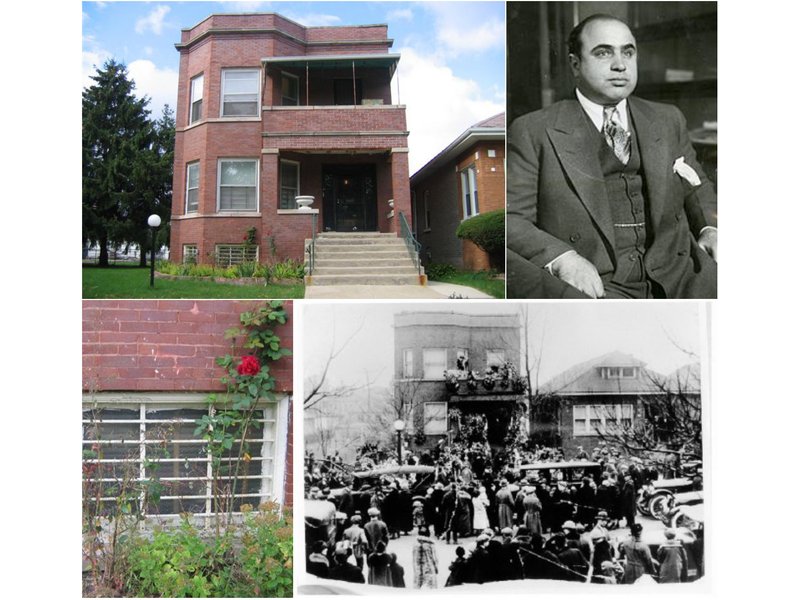
Buy Al Capone’s Chicago Home

AlCaponehomeIf these walls could talk … they wouldn’t say nothin’. They once were Al Capone’s walls, and they don’t rat.

A house on the South Side of Chicago, in the Greater Grand Crossing neighborhood, that once was home to Capone, Chicago’s most infamous mafia boss, is listed for sale. For $225,000, you can rest your head under the same roof at 7244 Prairie Avenue where Capone moved in during August of 1923. But the real estate agent insists you must prove you’ve got the cash to make the buy before you even set foot into the house. Continue reading “Buy Al Capone’s Chicago Home”