West Kingston Residents Want An End To The Tivoli Enquiry And Compensation From The Jamaican Government

DudusLove
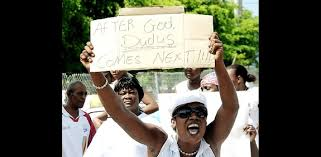
Dudus’ supporters, largely women, demonstrate along Spanish Town Road during the 2010 incursion.

Residents of Tivoli Gardens and surrounding West Kingston communities have threatened to march in a call on authorities to end the Commission of Enquiry currently taking place at the Jamaica Conference Centre, downtown Kingston.

The residents say that they are not pleased with the proceedings in the enquiry and are calling for it to be scrapped and a decision made to instead compensate those affected in the May, 2010 incursion by the security forces.

“We have been closely watching the enquiry, but we don’t feel any justice going come out of this for us. We believe it is best the authorities end the enquiry and compensate those residents who have suffered as a result of the incursion,” 60-year-old Marcia Morgan told the Jamaica Observer.

The West Kingston resident was part of a group of women and children who Sunday came out of their homes to voice their views.

“I also share that position; instead of spending all of this money on the Commission of Enquiry a fraction of the money used on the proceedings could help people who suffered to restart their lives,” said Sophia Beswick.

As the women shared their concerns some residents in the crowd said that they were willing to stage a march in the area to let their voices be heard.

“Right now when I look back on what has happened I suffered. I even lost a family member as a result of the incursion, but based on what is taking place in the enquiry I don’t see how that will help me in moving forward,” said another resident who identified herself as Sandra.

“We are calling for the authorities to halt this enquiry right now to send a message. People in the area are willing to stage a peace march to let them know we want an end to all what is taking place, is better them compensate the affected people,” said another resident.

Dave Hanson, another resident, insisted that the Commission of Enquiry is a waste of money.

“I think this Commission of Enquiry is all for show and a waste of money, all it is doing is putting money into the pockets of a set of bigwigs. So many things could be done with the money used to organise the enquiry,” he said.

“Compensate us for our losses, we no want no more enquiry,” added Samantha Clarke, another resident.

Jamaica Observer

Former Police Commissioner Testifies That Jamaica Was Fortunate Security Forces Responded To Dudus Coke’s Tivoli Gunmen

Jamaica Security ForcesThe former Chief of the Jamaican Defense Force stated in his testimony that Jamaica was fortunate that the security forces responded in May 2010 to the threat posed by gunmen associated with then Tivoli Gardens don Christopher ‘Dudus’ Coke. At the same time, he expressed deep disappointment with the level of social intervention in Tivoli Gardens following the security forces’ operation to arrest Coke.

Ellington, the former police commissioner, made the remarks while being questioned by Professor Anthony Harriott, a member of the panel of three commissioners looking into the operation by the security forces in May 2010 to apprehend Coke — who also goes by the name Omar Clarke — and restore law and order to the West Kingston area and sections of the Corporate Area and St Catherine.

“Jamaica is fortunate that the security forces responded to the threat as quickly as they did and with the impact it had,” Ellington said, adding at one point that “it would be anybody’s guess where Coke’s office would be today” if his Presidential Click criminal gang was successful in its bid to spread the resources of the security forces thin, and broke its will with its planned co-ordinated attacks.

Ellington likened the gang to “insurgents” and said that it presented itself as a “surrogate government”, which sought to expand its power and “perhaps political influence”. He also said that the gang threatened the operation of the Government with its targeted attacks leading up to the May 24, 2010 operation that led to the death of just over 70 civilians. A member of the Jamaica Defence Force was killed in the operation and several other members of the security forces injured.

“We were left with no choice,” Ellington said, noting that the police did everything they could to avoid a violent confrontation with the gang, and again expressed regret at the loss of civilian lives.

Coke is now serving time in the United States following his extradition.

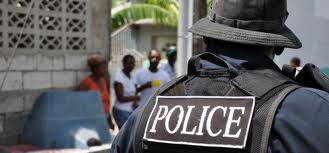
Yesterday, Ellington said he was disappointed with the social intervention in the community. “I am very, very disappointed that not much has happened, save and except for the work of the security forces. If you go there you will see that the police and soldiers have become permanent fixtures and you will see the work they are doing on the ground,” he said.

“If we had followed with improved political leadership and better economic opportunity for the citizenship we would not be here contemplating the future of Tivoli Gardens and other marginalised communities across Jamaica,” he said in response to questions from Harriott.

Questioned by Peter Champagnie, one of the attorneys for the Jamaica Defence Force, Ellington said “all the elements were there” to make the circumstances surrounding the efforts by criminals to prevent the apprehension of Coke a war against the State. He said that, in his 30-plus years in the force, he had never seen anything like it.

The former top cop added that he described the situation to the Government as a “challenge to the sovereignty” of the State.

He testified also that the police got intelligence that an aeroplane with illegal weapons landed at the airstrip in Vernamfield, Clarendon, days before the operation to apprehend Christopher Coke commenced.

The former top cop said he had not immediately been made aware of the report of the illegal shipment.

He testified also that it had been reported by police, who were by the Kingston Harbour, that 15 row boats with heavily armed men were heading toward Portmore in St Catherine.

Jamaica Observer

Most Americans Support The Death Penalty

Death PenaltyA majority of Americans support the death penalty, even though that level of support has been dropping fairly consistently for about two decades.

However, while there are sizable differences in how various groups view capital punishment — with big gaps divided by gender, race and political views — Americans seem to agree on one thing: There is still some risk that an innocent person will be put to death.

A new Pew Research Center poll found that seven in 10 Americans feel this way, with just a quarter of people saying there are enough safeguards in the system to prevent the execution of an innocent person.

This feeling is remarkably consistent among every group of people, even as there are solid divides found in the way people of different races and with different political beliefs view the system.

Yet regardless of other disputes over the death penalty, everyone seems to agree that the country’s capital punishment system carries with it an inherent risk of executing the innocent. Majorities of every group polled by Pew agreed that there is a danger that this will happen.

Death penalty opponents point to this danger as one of the main reasons they object to the practice. Attorney General Eric H. Holder Jr. said earlier this year he opposes the death penalty because “the ultimate nightmare” is that someone will be executed in error. And because death sentences are handed out as part of a system that ultimately relies on the judgments of human beings — people can, and do, make mistakes — such a failure is “inevitable,” he said.

“There’s always the possibility that mistakes will be made,” Holder said. “Mistakes and determinations made by juries, mistakes in terms of the kind of representation somebody facing a capital offense receives….There is no ability to correct a mistake where somebody has, in fact, been executed.”

This concept — an innocent person who is still found guilty and given the most severe sentence possible — is obviously not theoretical. Since the early 1970s, more than 150 people sentenced to death have been exonerated, according to the Death Penalty Information Center. Meanwhile, a record 125 people were exonerated in the United States last year, and six of those people had been sentenced to death, the National Registry of Exonerations said in its report.

In Louisiana last month, a former prosecutor publicly apologized for helping put a man who turned out to be innocent on death row. The prosecutor argued that the situation with Glenn Ford, the exonerated man who was eventually released, showed how easily the system could be manipulated by an eager prosecutor and questionable evidence.

“This case shows why the death penalty is just an abomination,” Marty Stroud, the former prosecutor, told The Post last month. “The system failed Mr. Ford, and I was part of the system.” He added: “All it is is state-assisted revenge. We can’t do it. It’s arbitrary, it’s capricious. And I believe that it’s barbaric.”

[See Also] How the death penalty continued its slow, steady decline last year

The case of Cameron Todd Willingham, who was executed by Texas in 2004, remains both in the news and in the court system. Willingham was put to death for setting a fire that killed his three daughters. Yet fresh doubts linger in this particular case more than a decade later, as the jailhouse informant who testified against Willingham later said he lied on the witness stand to reduce his own prison sentence. The prosecutor in the case was formally accused of misconduct in court last month.

It may seem odd that so many people would support the death penalty while also acknowledging that innocent people could very well be put to death. Part of that may be accepting the inherent risk that accompanies something as irreversible as death, but a part of it may also simply be that people are not paying that much attention to capital punishment. Executions in this country are generally carried out at night inside heavily guarded prisons with just a small handful of witnesses, so the public rarely takes note of them.

Nearly half of Americans told Pew they think the number of people put to death has remained steady or increased over the last decade. In reality, the number of executions has fallen in recent years, dipping last year to the lowest number in two decades. As we noted last year, support for the death penalty did not really budge after high-profile botched executions, and it was unclear how many people paid much attention to these incidents or the people who were exonerated.

So why do people still support it? Well, most people — a little more than six in 10 — say that the death penalty is morally justified when someone commits a crime like murder. About half as many people say it is morally wrong. The same number of people who think it is morally justified also do not believe that the death penalty can deter serious crimes.

Among people who do support the death penalty, nine out of 10 of them say it is morally justified in cases like murder. That is far and away the largest gap among the four categories viewed in the graphic above, highlighting what would appear to be the biggest gulf between supporters and opponents.

As for who actually supports the death penalty and who is opposed to it: More men support it than women (64 percent to 49 percent), a gap that has grown significantly over just the last four years, as more women have turned against it.

There is also a considerable divide among people over whether or not the death penalty is racially imbalanced.

A majority of white people support the death penalty (63 percent support, 33 percent opposition), basically a flipped image of the way black people feel about the issue (34 percent support, 57 percent opposition). Hispanic people are more evenly split, but opposition (47 percent) narrowly edges out support (45 percent) among them; they aren’t as opposed to it as black people, but they are not nearly as supportive as white people.

Still, about half of people overall think minorities are more likely to get a death sentence than a white person who committed a similar crime. Death-penalty opponents are very likely to view the system as being racially unfair: Seven in 10 opponents say the sentencing is racially unfair, while about four in 10 supporters say the same thing.

Among black people, these opinions are even more pronounced, as more than three-quarters of black respondents told Pew white people are less likely to receive the death penalty. Meanwhile, white people are split between that opinion and seeing no racial disparity.

This is also the area where the biggest split can be seen based on a person’s level of formal education. While support for or opposition to the death penalty is not that dramatically different for people who have graduated from college versus those did not, college graduates are much more likely to think the death penalty is racially imbalanced (60 percent) than people who did not attend college (44 percent).

Democrats are more than twice as likely as Republicans to think that white people are less likely to get a death sentence. This has accompanied a big overall shift in the way Democrats view the issue. In 2011, more Democrats said they supported the death penalty (49 percent) than opposed it (43 percent). Now, after a big swing in opinion, a majority of them oppose the death penalty (56 percent), while a smaller number support it (40 percent).

Opinions among Republicans are basically the same over the same period (a little more than three-quarters of them support it), while most independents still support it (a number that dipped to 57 percent now from 64 percent then).

Washington Post