
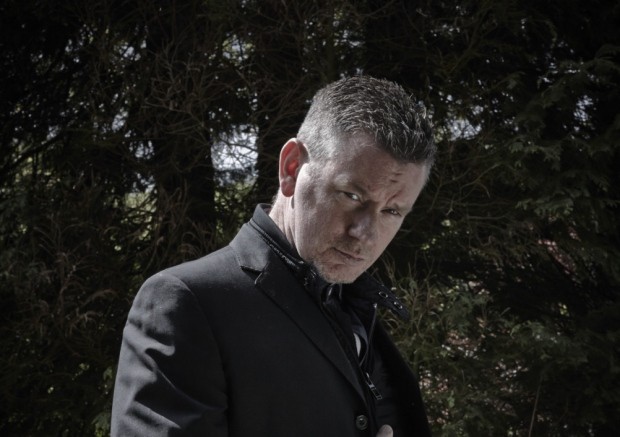
Crime writers often overlook victims and treat them as purely as entertainment, Scottish actor and writer John Gordon Sinclair has said.
Sinclair, who combines his acting career with crime writing, received the “green light” two weeks ago from Faber for his third book.
His debut novel, Seventy Times Seven, and its sequel, Blood Whispers, were described as “remarkable” and “astonishing” by critics.
But the actor turned writer said that he has grown concerned that the “missing voice” in crime novels was frequently that of the victim.
“There is almost always no impact statements on victims. It is as if they are there purely for entertainment with no emotional context. That’s what seemed to be missing from the ones I had read,” he told Scotland on Sunday.
“When I was reading Cormac McCarthy’s Blood Meridian, which is fairly brutal, I stopped halfway through and thought ‘how on earth could you class it as a classic?’ It was vile and horrible and I thought ‘can I actually read anymore?’
“Then I read an interview with him [McCarthy] where he said he wanted the violence to have the same impact on the reader as witnessing real violence.”
Sinclair said he wanted his work to have the same sort of reality and would be exploring more of the emotional side of violence in his latest novel, which is mostly set in Albania.
“I’m trying not to glorify violence and always want the reader to feel the descriptions are ‘too much’ and flick the page.
“This time I’m going to go much more for the emotional side.
“The thing which sparked the thought off for me was reading Anne Cadwallader’s Lethal Allies: British Collusion in Ireland about the collusion between the British Government and the security forces and the impact on ordinary families.
“It made me wonder what the people are doing now, the impact of it all on their lives after living in a really heightened situation when ordinary life was lived under a blanket of fear. I’m now at the stage where I’d like to speak to people about this, not write their life stories, just sit down and discuss how it has affected them.”
David Sinclair, chief executive of Victim Support Scotland, said he did not entirely agree with the writer.
“I’ve seen lots of fiction where the victim is incidental with no depth given to the victims’ side. While elements of lots of the victims tend to be drawn from some reality there are some which ignore the victims’ perspective. But there are many books out there who do give them space. So I would say what John is saying is an interesting observation but a bit of a generalization.
“If John Gordon is interested in getting to understand how victims feel, Victim Support Scotland would be more than happy to help him facilitate that.”

 The Pen Hustle With Brandy Cavalli